
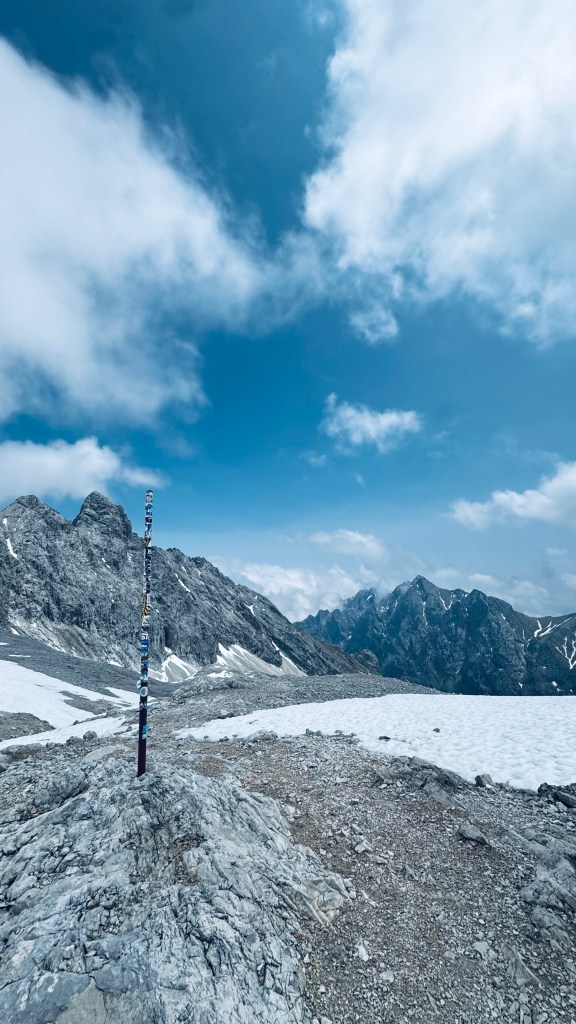
If you’re still torn between getting up at 4am to conquer the tallest mountain in Germany in a single day or taking the more relaxed, two-day route with a cozy night in a mountain hut—let me make your life easier: go for option 2. Start your hike after a slow morning, wander through the Partnachklamm (it only opens at 8am anyway), and enjoy the gentle start of the trail. Then soak up the evening hut vibes with fellow hikers who are equally exhausted, equally happy, and equally proud of the kilometers already behind them. Sure, there’s pride in doing it in one day alone, but why not trade speed for scenery and turn it into a two-day adventure with time to recharge in the coziest atmosphere imaginable?
DAY1: GARMISCH-PATENKIRCHEN TO REINTALANGERHÜTTE


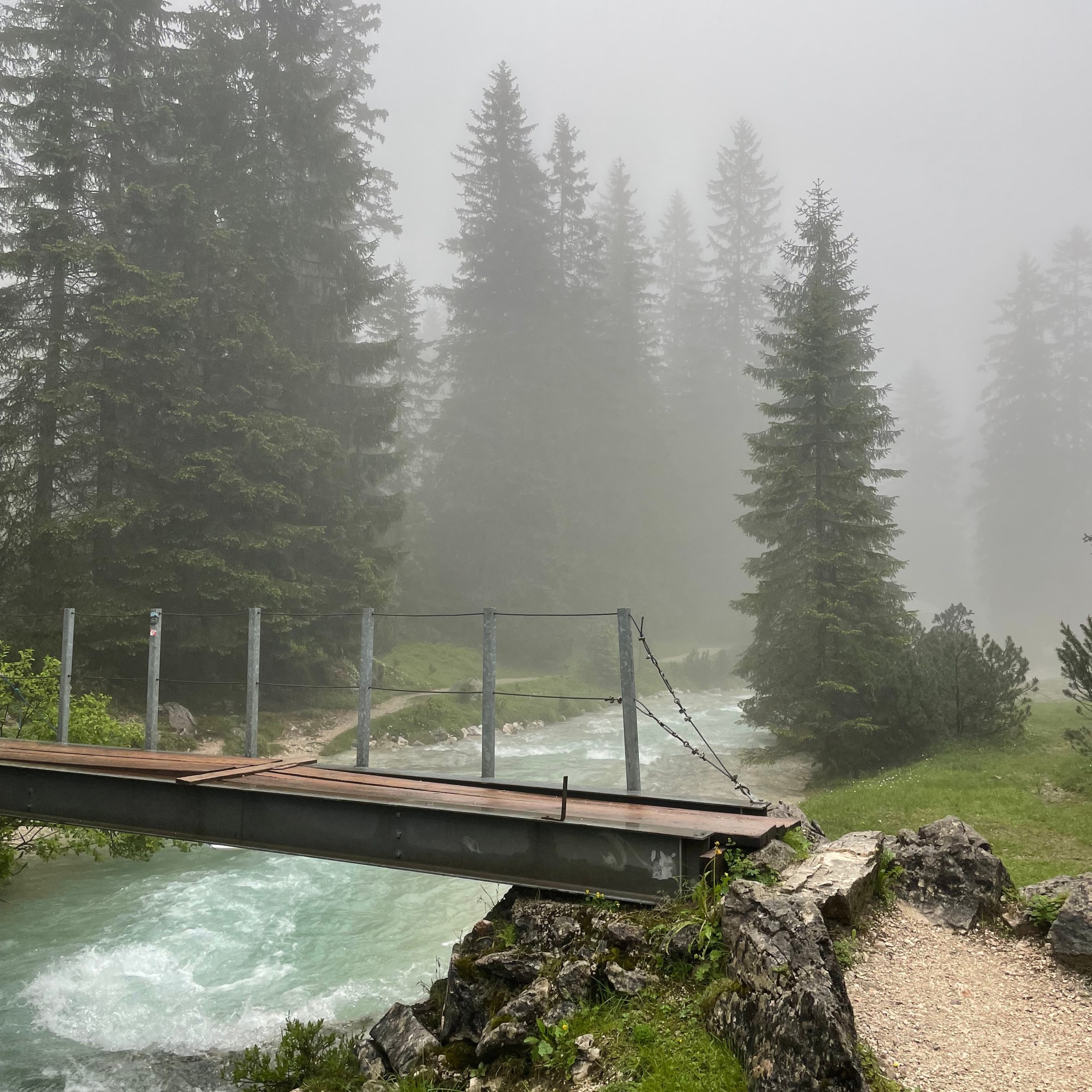
We did the hike in early June 2025, and unfortunately, summer hadn’t yet arrived at the Zugspitze. The constant morning rain on day one cooled everything down to a crisp. Then again, that the weather gods weren’t with us that weekend was the only reason we managed to get two last-minute beds at the Raintalangerhütte, usually booked solid a year ahead. So off we went, rain jackets, hats, shoe covers and all, starting at the Olympic ski jump in Garmisch-Partenkirchen around 11am with four hours to go until our hut for the night.
The entrance to the Partnachklamm appears just a few hundred meters from the start, where you buy your €10 ticket (show your Garmisch-Partenkirchen guest card for a discount). After the gorge, the route continues along a forest road with a gentle incline—nothing technical yet, more like a high-intensity walk. A little more than 2 hours later, our soaked bodies found refuge at the Bockhütte, where we treated ourselves to an extensive lunch break with pea stew, coffee and an open fire to dry our clothes and warm up our bodies.
Re-energized and finally out of the rain, we continued on a rocky path winding close to the Partnach river. It soon steepened into gravel and demanded more effort, but the reward followed quickly: the distant waterfall came into view just an hour after leaving the Bockhütte. With every step, we gained elevation and were treated to stunning views of the valley below. Twenty minutes later, we reached our home for the night—the Raintalangerhütte.
ONE NIGHT AT THE REINTALANGERHÜTTE


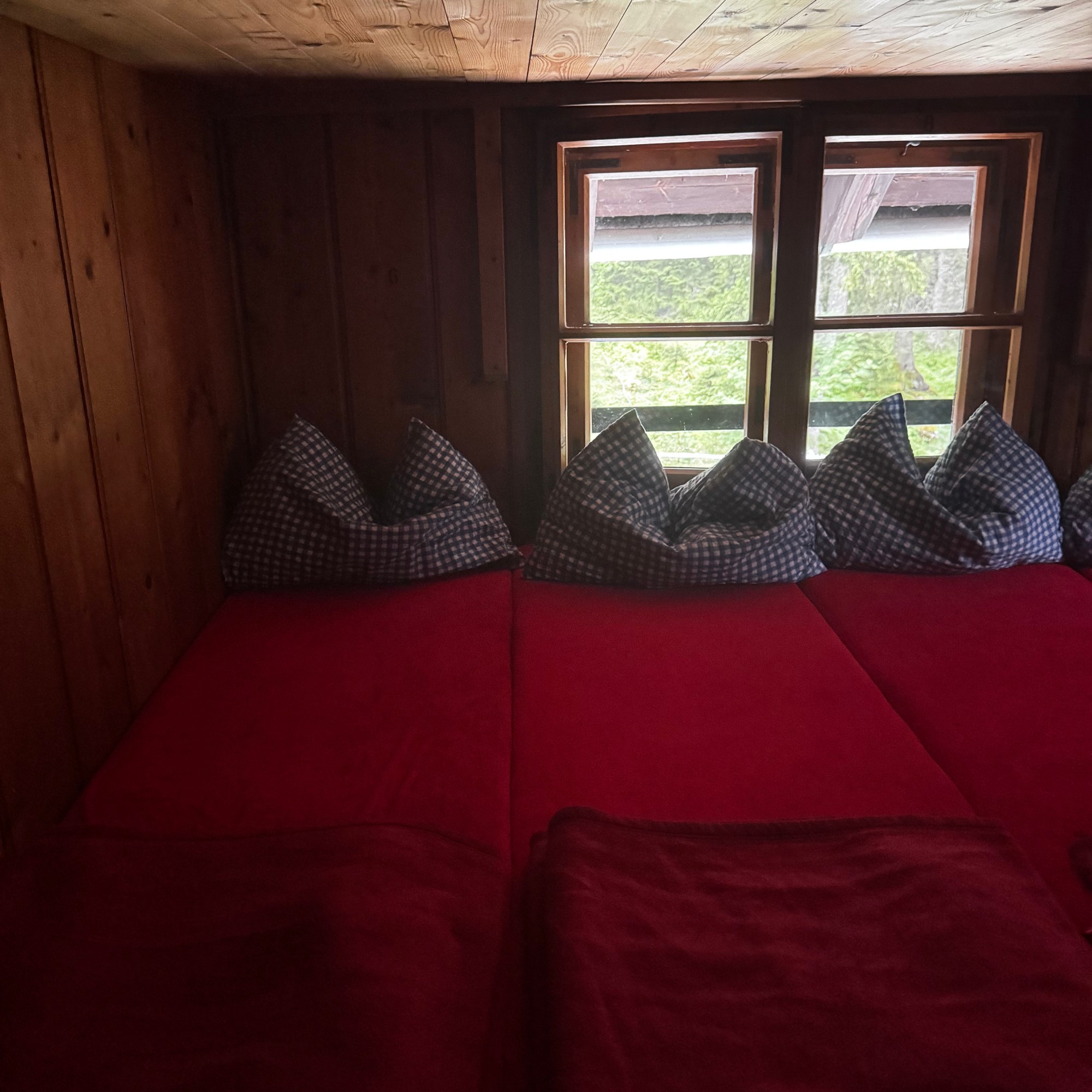


At 4pm, after exactly 4 hours of hiking, we reached the hut. After having gotten soaked twice (first by rain, then by our own sweat), we were deeply looking forward to changing into dry clothes as soon as possible. Check-in was done by one of the volunteers who spend their summers up here working for room and board. While it’s “only” a bed for the night and a warm meal for us, for her, the hut – reachable only by foot or helicopter – offered an escape from the noise, stress and mindless consumption of the big city life. Up here, board games and books are the only distraction and single-use applies only to toilet paper. Every gram of waste is measured in the money it costs to be transported by to the valley by helicopter. A better mindfulness exercise than spending a couple of months up here is yet to be found.
We reserved breakfast by paying in cash and receiving small wooden coins to exchange for plates and cutlery in the morning. Dinner wasn’t served until 6:30pm, but the guest room was already buzzing, so we decided to claim our spots early. A couple rounds of Kniffel and a Radler later, our Käsespätzle and soy goulash arrived—and we devoured both. One of the reasons we chose the Raintalangerhütte over the Knorrhütte (a bit further up) was its outspoken vegetarian and vegan menu. I absolutely loved that they are the first DAV (German Alps Association) hut to switch fully to organic food. Everything is focused on sustainability, in the most traditional sense of the word: persistent, long-lasting, enduring. Not supporting conventional agriculture that destroys nature, animals and our planet, but helping to build a world that will still be enjoyable for our grandchildren. And that organic food was nothing short of delicious!
DAY 2: VIA KNORRHÜTTE TO ZUGSPITZPLATT


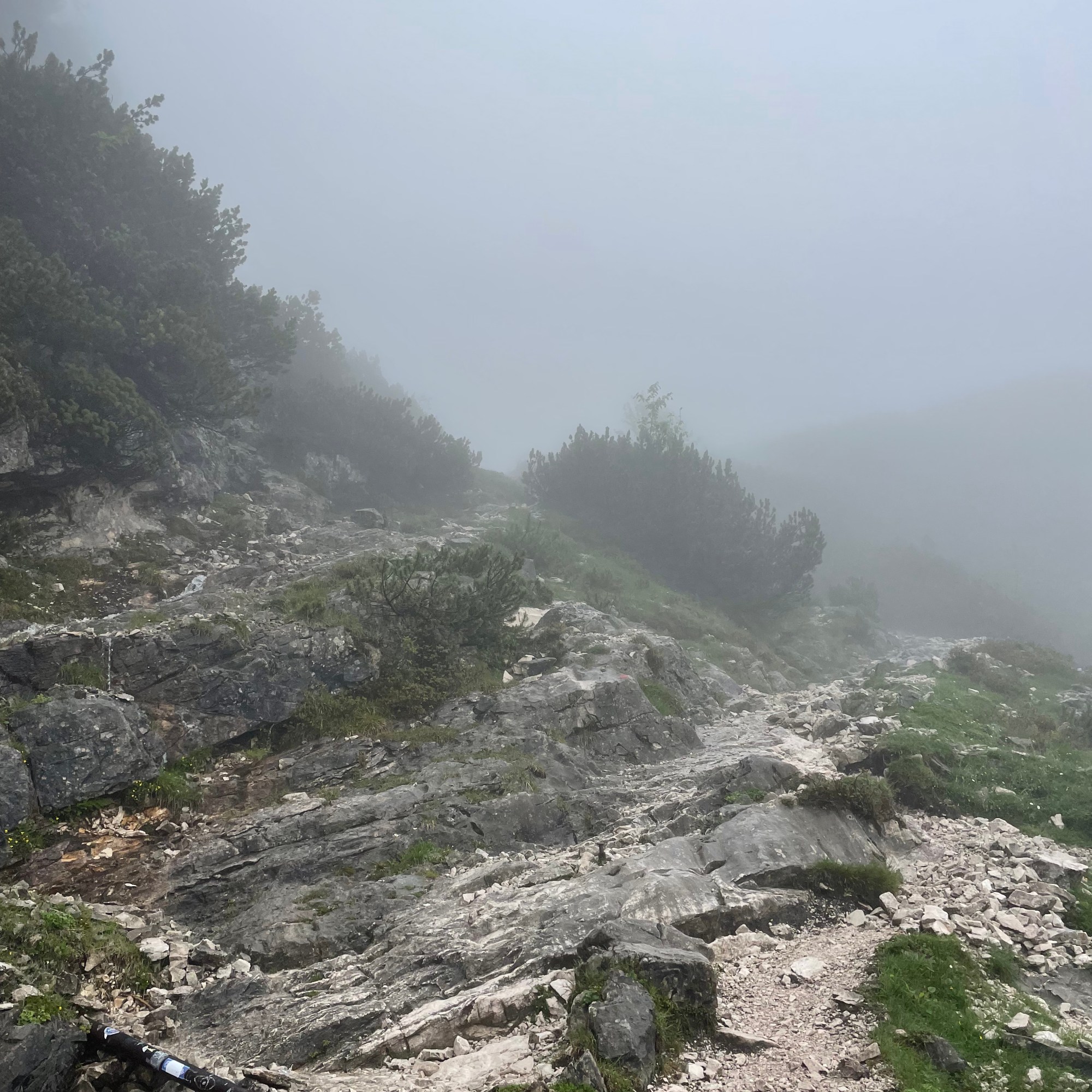
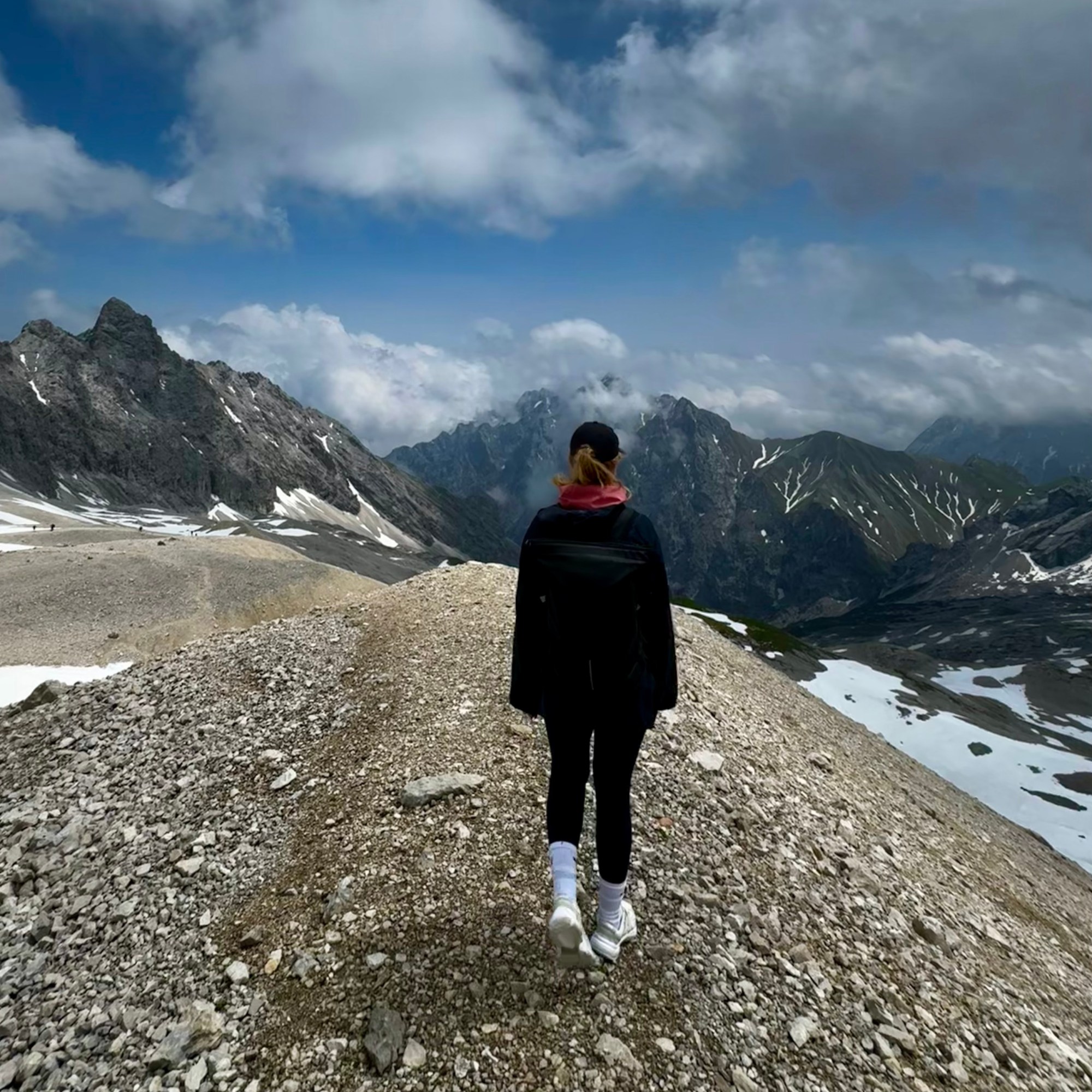
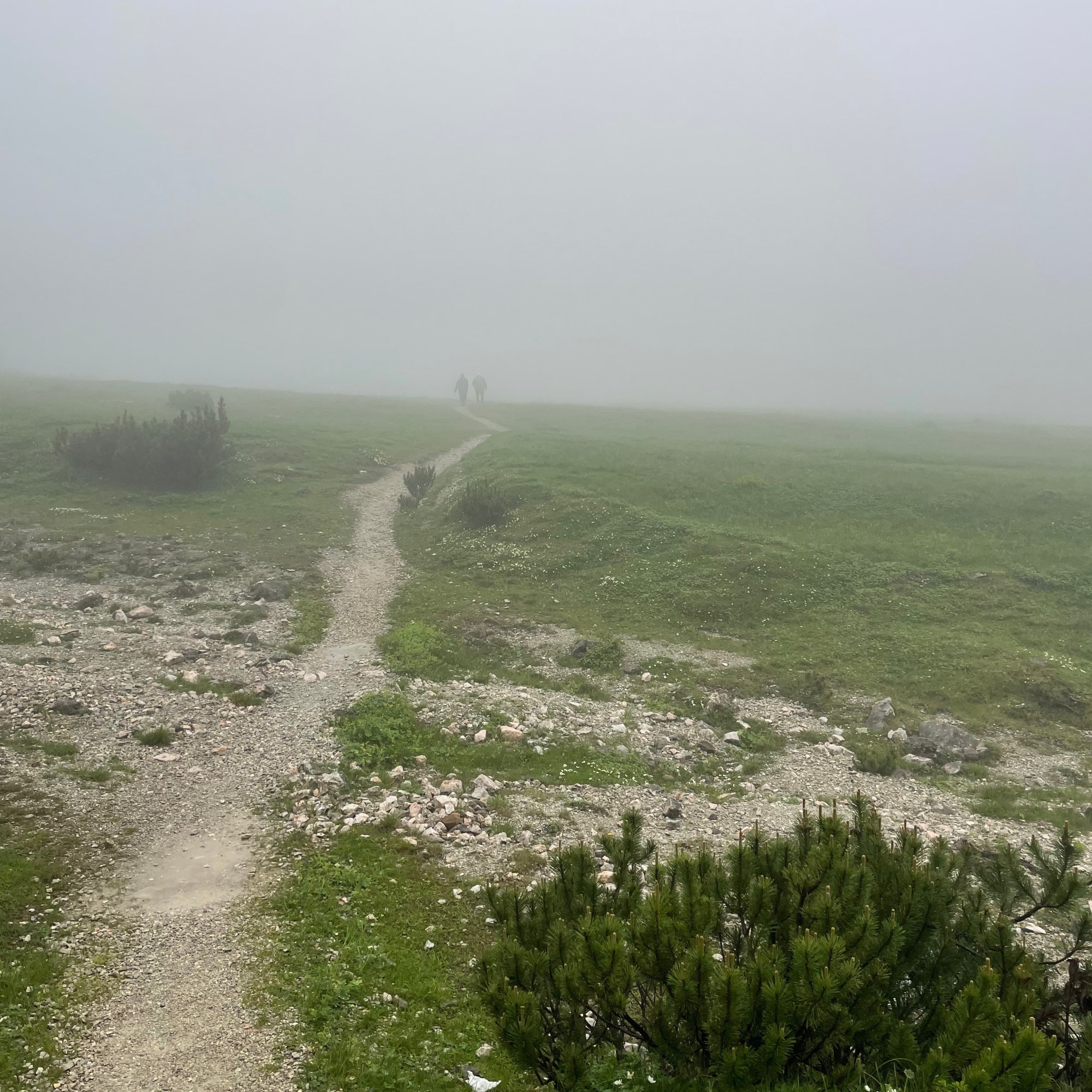
Lights went out at 10pm, and with breakfast at 7:30am, we still got a good night’s sleep. After homemade Bircher muesli, fresh bread with spreads, and oat-milk coffee, we hit the trail again at 9:30am. Only half an hour later, the steepest climb of the entire hike began and didn’t stop until we reached the Knorrhütte just under two hours after having left the Raintalangerhütte. About 45 minutes after that, the first snowfields appeared, and if I hadn’t wished for proper hiking boots before, this was definitely the moment. From the Knorrhütte, it took us 2 hours and 15 minutes to reach the Gletscherbahn, which takes you from 2.588-2.944m in 4 minutes (no ticket needed). Given the icy and foggy conditions, we opted against the final ascent and took the cable car instead. Arriving at the top, the fog had thickened to such an extend that we couldn’t even see the summit cross and access had been blocked to prevent accidents.
With the photo op gone and 0 degrees being, despite all our layers, much too cold anyway, we treated ourselves to some summit Kaiserschmarrn instead. And just before catching the last cable car down at 4:45pm, the fog lifted, revealing the marvellous view of the Eibsee shimmering at the foot of the mountain. This hike really had it all.
MY TIPS & RECOMMENDATIONS
- The hike is challenging but totally doable with a decent fitness level—no special gear needed—and I’d recommend it to anyone because it’s simply that beautiful.
- I did the hike in my Nike trainers and it’s definitely doable but all the gravel and snow fields are much easier to navigate with proper hiking boots and ankle protection.
- Book your night at a hut well in advance, they book out fast (we got lucky with our two beds only a week before the hike due to a bad weather forecast but other hikers told us the huts are sometimes fully booked a year in advance.
- If you plan on doing more hikes in the German alps, consider becoming a member of the German Alps Association (DAV = Deutscher Alpenverein). The membership gave us 50% discount on the night at the hut and next to other benefits also includes insurance in case of a mountain accident.
- Book your accommodation in Garmisch as close as possible to the Olympic ski jump where you’ll start your hike on day 1 and which is only a 15-min bus drive from the train station.
- Prepare for rain: waterproof hiking boots / shoe covers, backpack cover, waterproof jacket, extra set of clothes to change into (incl. socks). The first 2 hours in the rain made me wish I had packed all of the above.
- Put your electronics and cables into a ziplock bag. In case any moisture gets into your backpack, at least your power bank survives.
- Raintalangerhütte: you’ll need a sleeping bag lining, slippers, cash and a power bank (there’s only limited plugs in the guest room which are usually all taken).
 lenacatherine